AI pipeline tool
Internal tooling for building purpose-driven AI systems
- Role
- Product & UX Lead
- Duration
- 2 months, part-time
- Product
- Internal AI configuration platform
- Focus
- Workflow clarity, cognitive load reduction, iteration speed
Overview
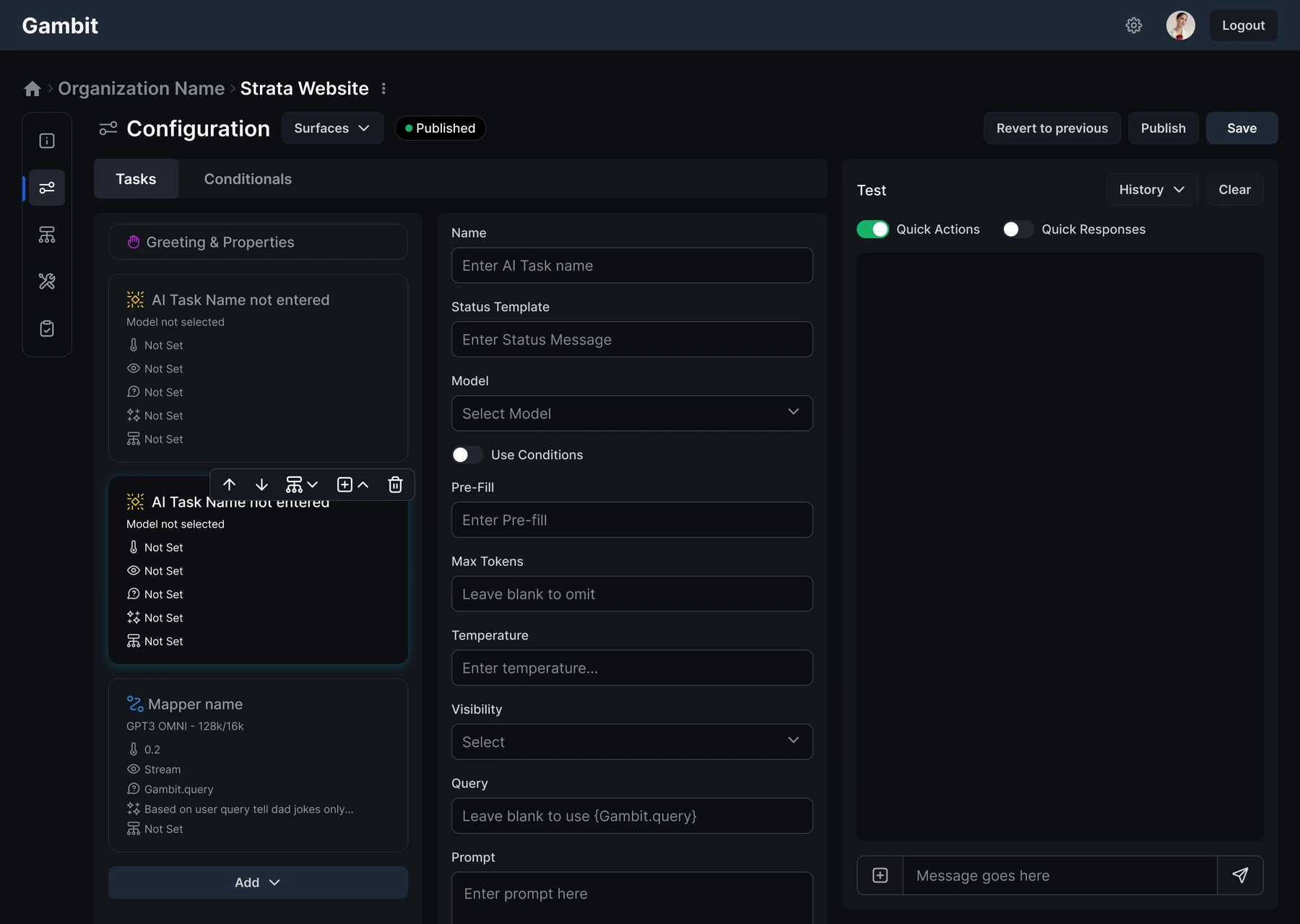
This project redesigned an internal platform for building and managing AI chat systems for very specific uses. The prompting system underneath was powerful and precise. The tool for configuring it had become slow, complex and hard to reason about.
At Strata, I evaluated the existing experience and reworked the workflows and the interface so people could reach the system's capabilities faster and more easily, without losing control or flexibility.
Problem
The technical foundations were strong, but the tool held people back:
- Managing complex prompt chains and dependencies took a lot of mental effort
- Common configuration tasks were inefficient
- It was hard to see how prompts flowed through the system
- Testing and refining behaviour was slow
The users knew the domain. The tool made everyday work harder than it had to be.
Key decision
I fixed the workflow before touching the UI.
With two months, part-time, a full rebuild was off the table. I restructured how configuration works first: clear stages, prompt flows and dependencies made visible, and fewer steps for the common tasks. The visual refinement came after.
Approach
The principles:
- Restructure workflows before refining the UI
- Make system behaviour and dependencies explicit
- Cut the steps for common tasks
- Reveal complexity only when it is needed
The aim was an interface that matches how people actually think about building and refining AI behaviour.
Solution
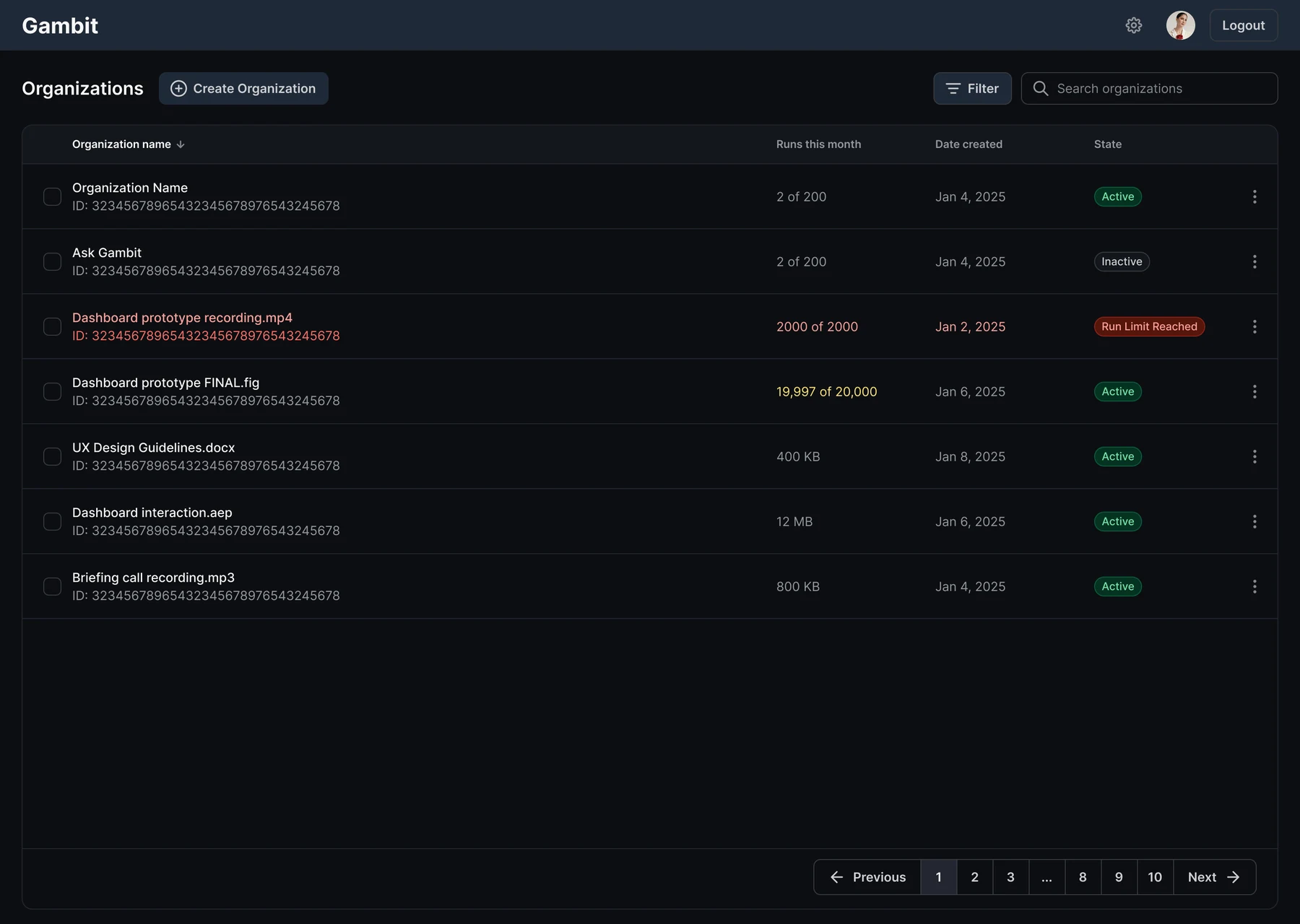
The redesign gave the tool a clearer structure and faster workflows.
Streamlined configuration
- Clear stages for configuration and iteration
- Visible structure around prompt flows and dependencies
- Shorter paths for common actions
- Better hierarchy, feedback and awareness of state
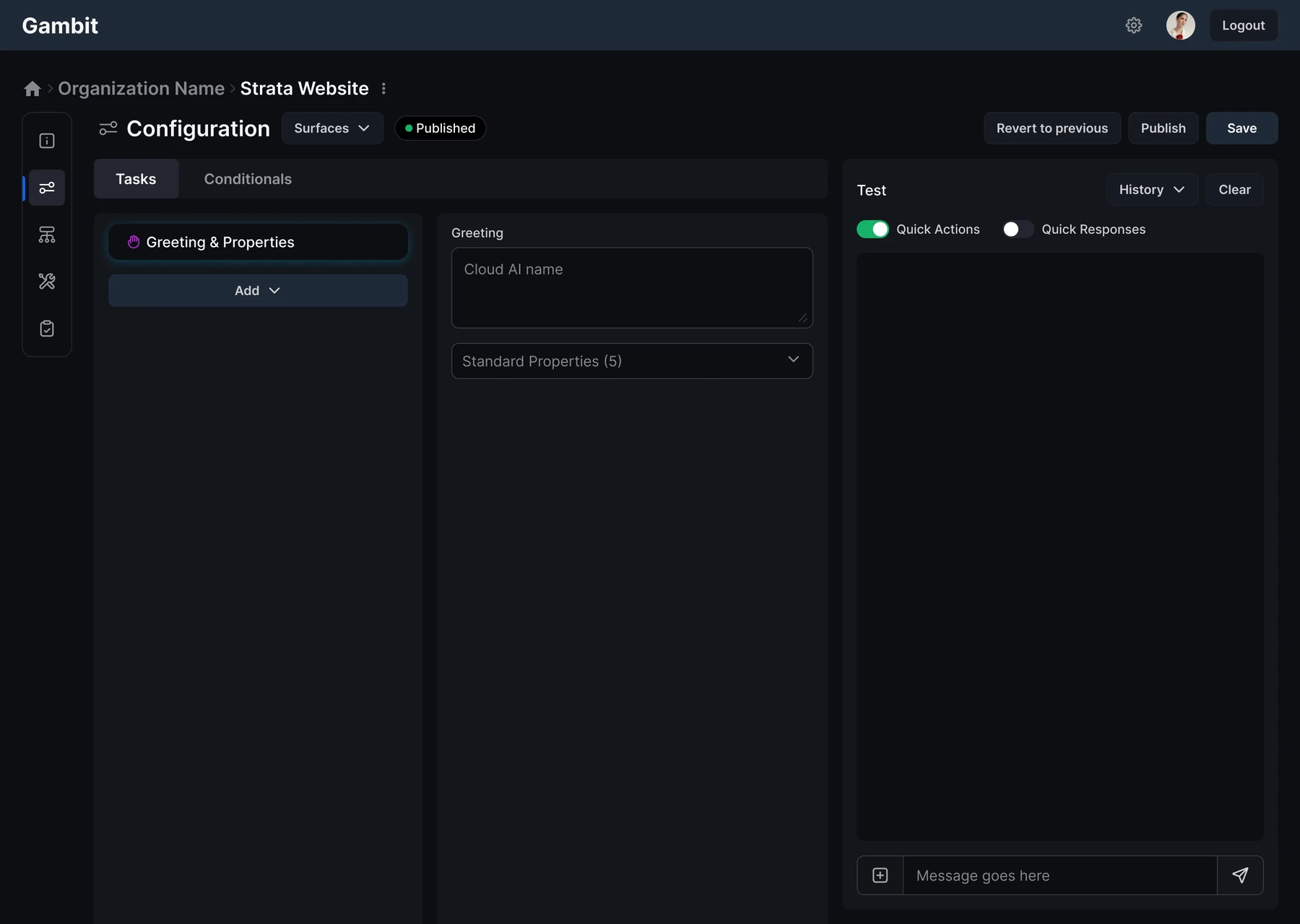
I used high-fidelity designs and interactive prototypes to test the new approach with stakeholders.
Outcome
- Bots are faster to create and revise
- Complex logic is easier to manage
- People can see how a change will affect the system's behaviour
- Users are more confident working with live configurations
Discuss this case study with you?
I'd be happy to walk through this project in more detail and discuss how this approach might apply to your needs.