Student safeguarding
- Role
- UX Director / Product Design Lead
- Duration
- 3 months
- Product
- Student safeguarding software
- Focus
- Rapid product delivery, executive alignment, risk reduction through focused UX
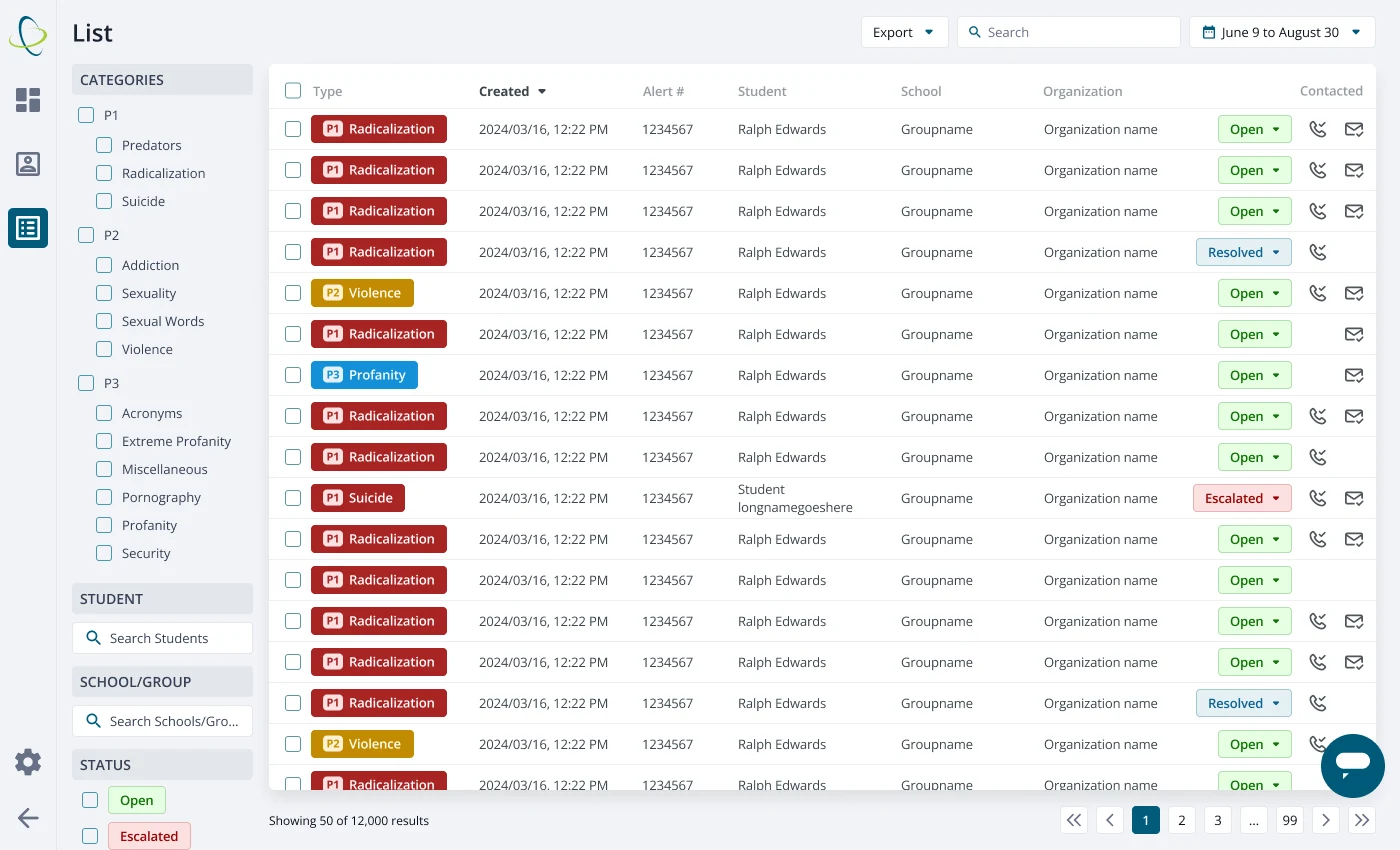
Overview
The client needed a new student safeguarding product in market fast. They did not want a concept or an internal prototype. They wanted a production product they could deploy with a real customer.
At Strata, I led product design from the first concept through to production. I worked directly with the client's executive team to trade off speed, usability and delivery risk, and to keep everyone agreed on priorities so we hit the date without cutting core quality.
Problem
The job was urgent and a lot was unknown:
- Three months from concept to production
- A new product area with real commercial and reputational risk
- Little room for rework once development started
- Executives, sales and engineering who needed to agree quickly
Leadership wanted to know the product met real customer needs before they committed more development money.
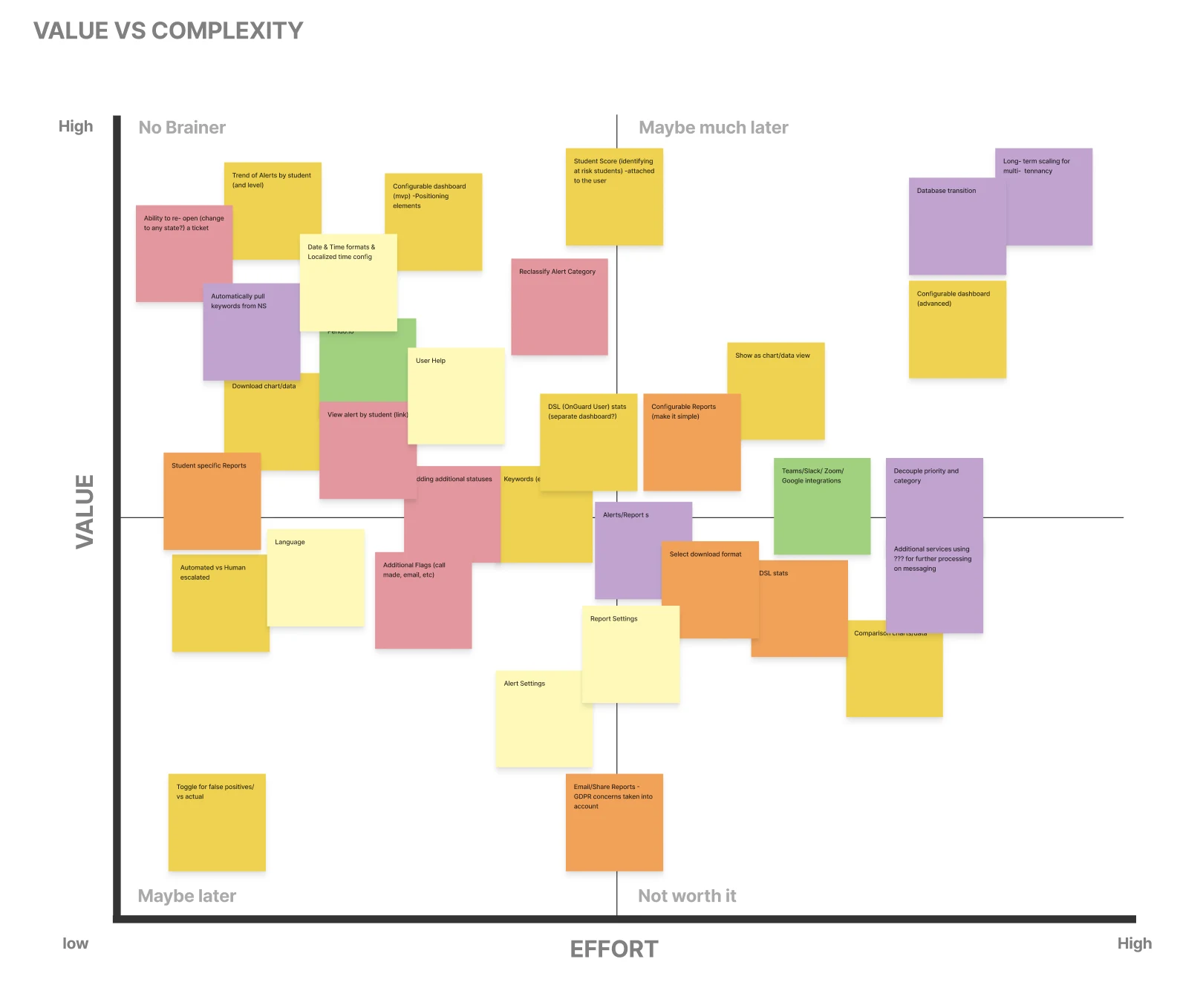
Research & discovery
Internal stakeholder alignment
With three months, discovery had to be short and practical. I ran working sessions with:
- Executive leadership
- Engineering leads
- Sales and customer-facing teams
The sessions settled who the users were, the core use cases, what success meant and what could not move. They also got the decision-makers agreed early, which saved arguments later.
Targeted user validation
We skipped broad exploratory research and tested only the riskiest assumptions:
- The core safeguarding workflows
- Whether administrators understood what they were doing and trusted it
- What they expected to see and to control
That kept design effort on the parts that mattered most.
Key decision
I cut discovery down to the assumptions that could sink the product.
A three-month deadline left no time for open-ended research. So we tested three things: the core safeguarding workflows, whether administrators could act with confidence, and what they expected to see and control. Everything else waited.
Synthesis & insights
What we learned:
- Safeguarding work is sensitive, so workflows have to be clear and defensible
- Administrative actions cannot be ambiguous
- Time-critical decisions need less to think about
- The system has to say plainly what it did, so people trust it
These findings set the priorities and stopped us building features that added little.
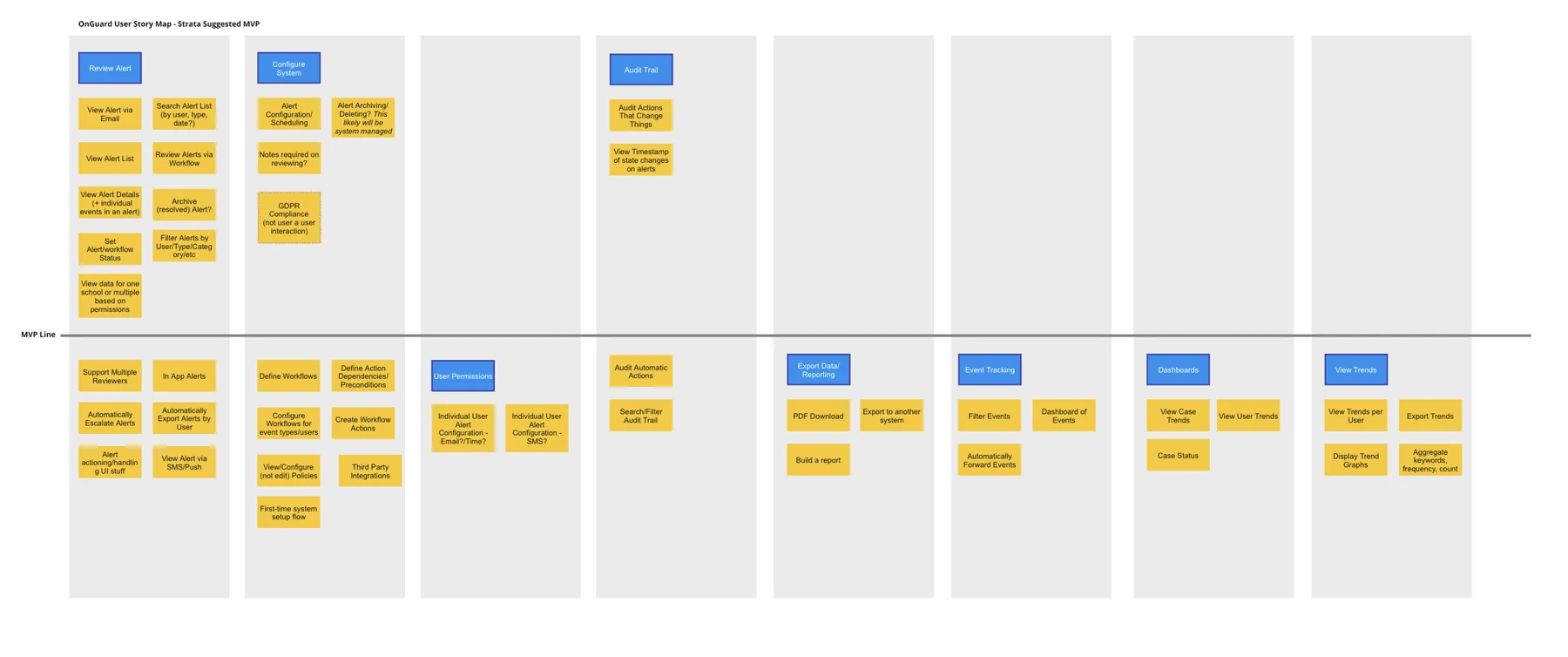
UX & interaction design
From those priorities, I led the design of:
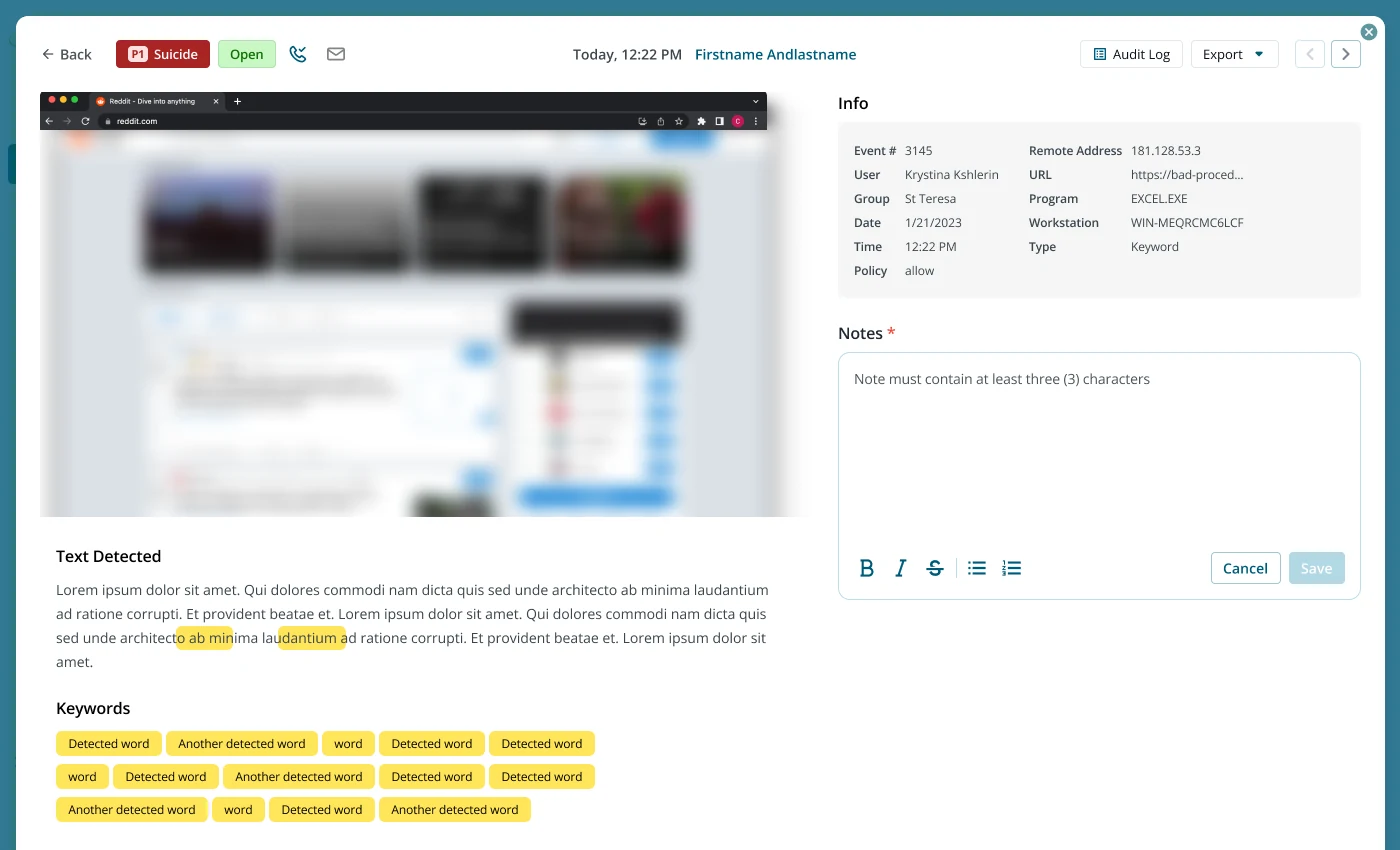
- The core user flows for safeguarding work
- Defined paths for monitoring, review and response
- Simpler interactions that do not depend on knowing how the system works underneath
These flows became the backbone of the product and set the order of development.
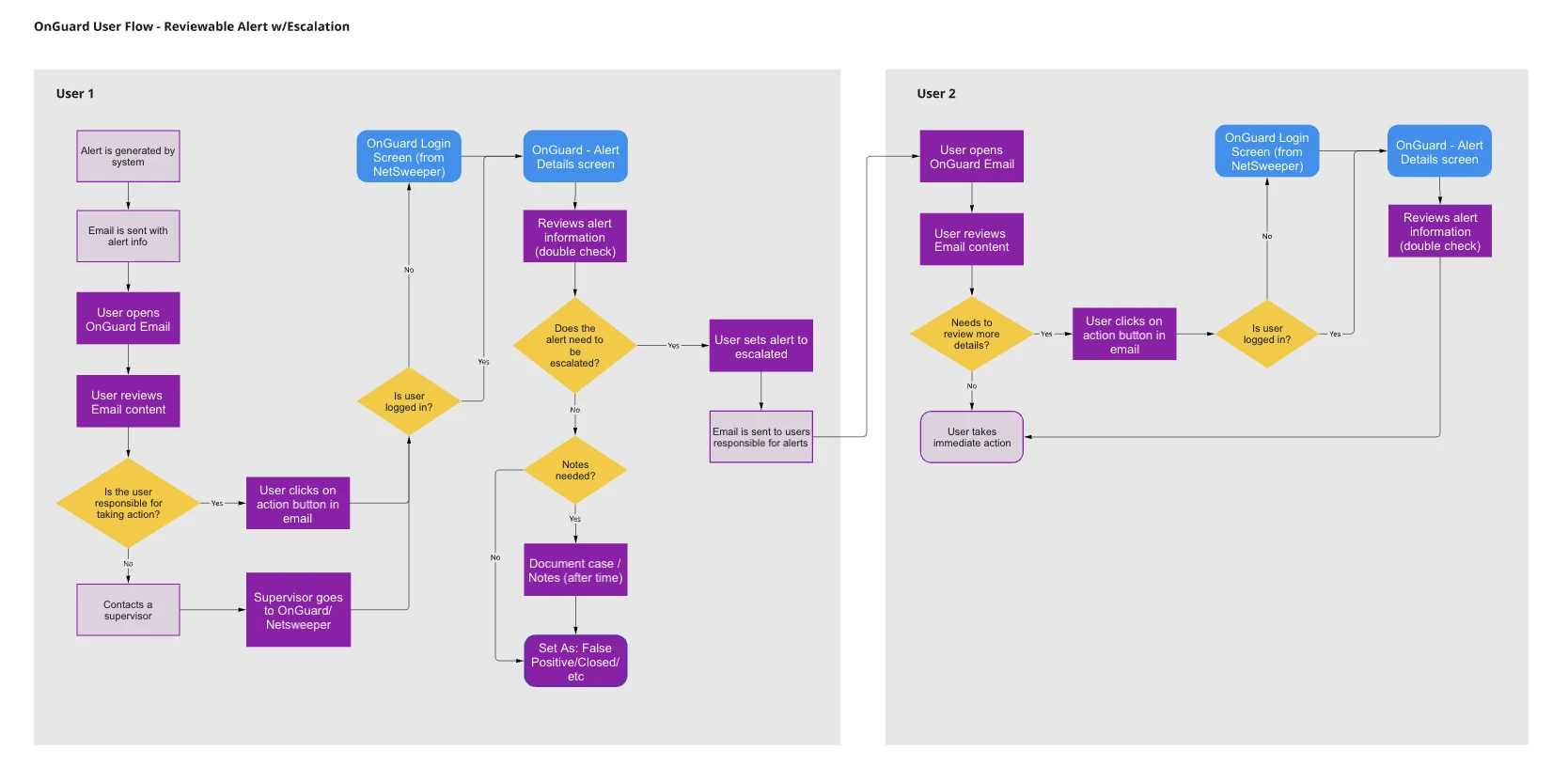
UI direction & prototyping
I delivered:
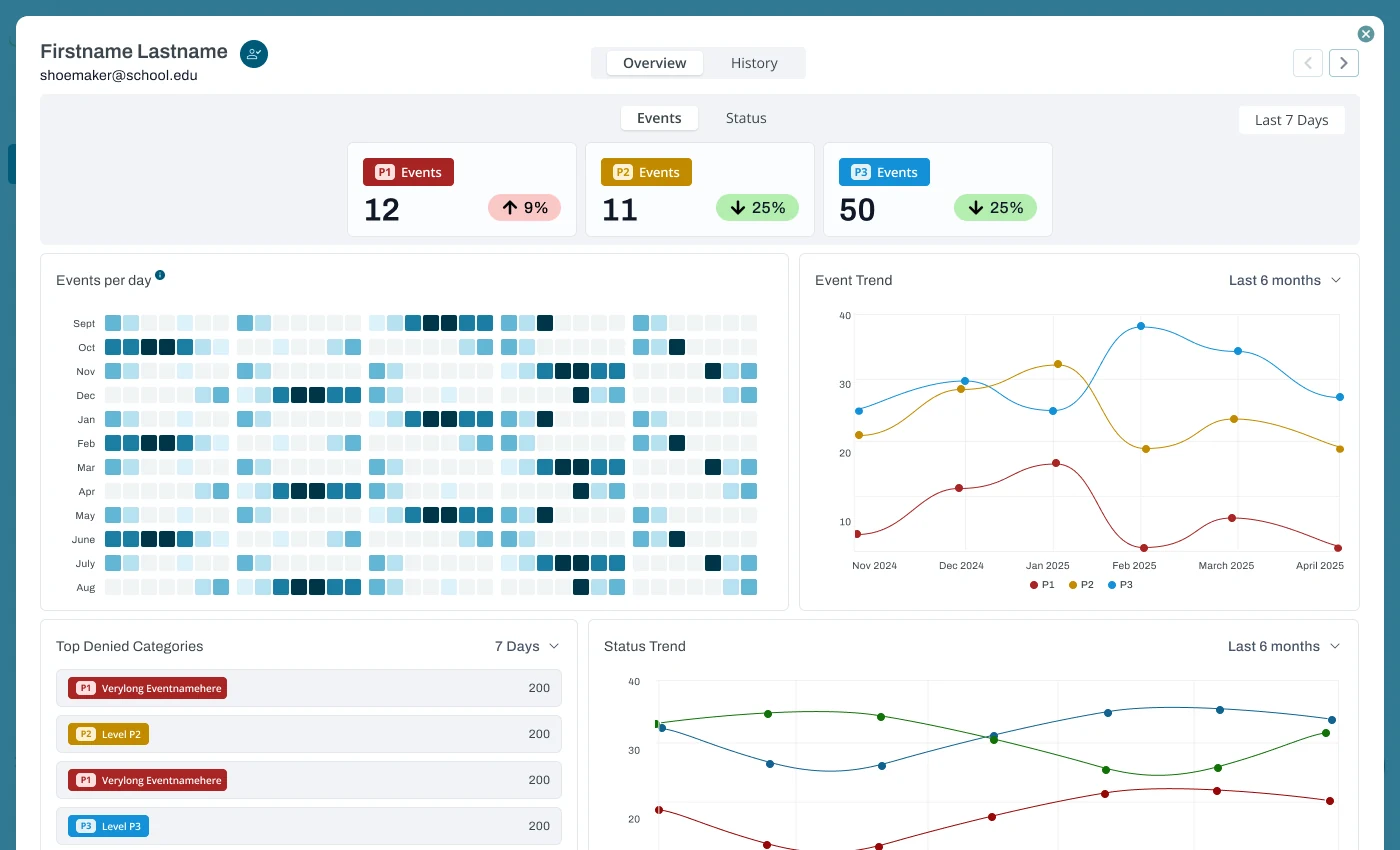
- High-fidelity designs built around clear hierarchy
- The same interaction patterns across every core workflow
- Prototypes that ran realistic scenarios from start to finish
I reviewed the designs with engineering as we went, so nothing was drawn that could not be built.
Outcome
- Delivered on schedule, inside three months
- Beta launch with a first customer
- Early customer feedback shaped the first changes after launch
- The engagement grew into a multi-year partnership
Discuss this case study with you?
I'd be happy to walk through this project in more detail and discuss how this approach might apply to your needs.